Research Institute for Spiritual Knowledge Management
Advancing Transformative and Future-Oriented Knowledge Practices
The Research Institute for Spiritual Knowledge Management explores how knowledge can support individuals, organizations, and communities in moving toward their best possible future.
Spiritual Knowledge Management understands knowledge not merely as something that can be stored, transferred, or reused. It understands knowledge as a transformative process of orientation, resonance, responsibility, and becoming.
The institute develops conceptual frameworks, empirical research approaches, and practical formats that help to integrate rational, emotional, embodied, spiritual, and self-transcending dimensions of knowledge into contemporary Knowledge Management. It brings together scholars and practitioners who are interested in rethinking Knowledge Management in light of meaning, wisdom, human development, and future-oriented transformation.
Management of the Research Institute
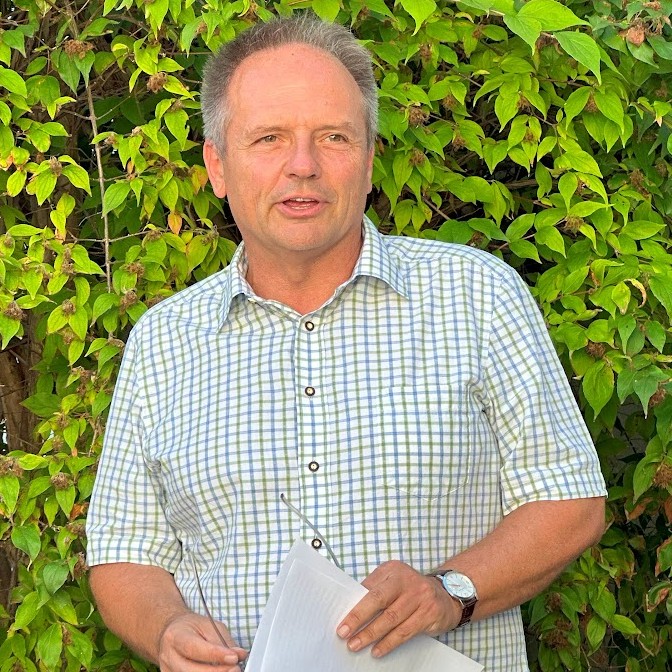 ao.Univ.-Prof. Dr. Alexander Kaiser
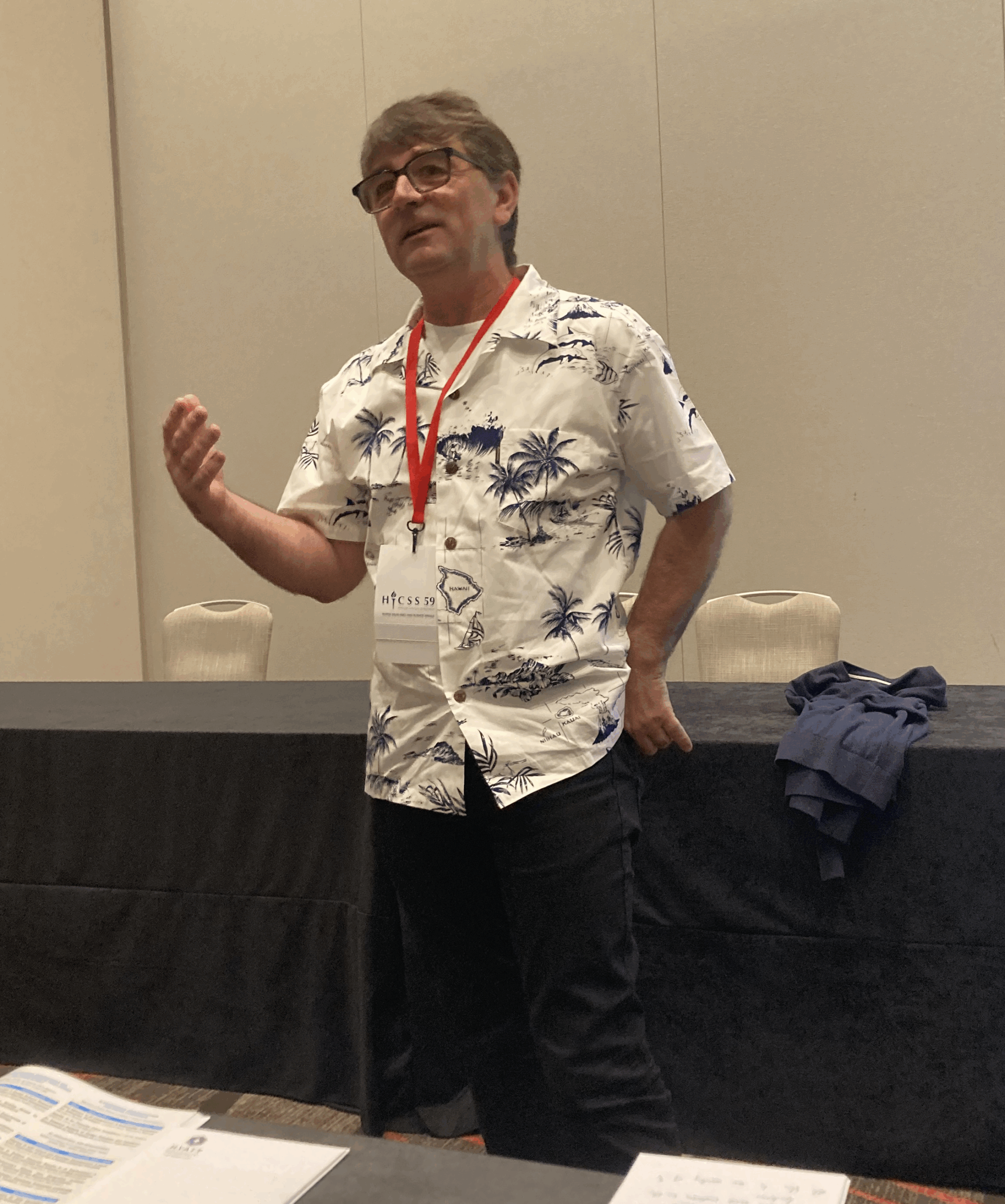 Dr. Ernst Wageneder
Research Focus
The institute’s work focuses on questions such as:
- How can knowledge practices foster orientation, responsibility, and transformation, not only efficiency and performance?
- How can spiritual dimensions of knowledge be approached with academic rigor and conceptual clarity?
- What kinds of enabling spaces and practices support deeper learning, unlearning, and personal as well as collective development?
- How can scientific insight be connected with meaningful action in organizations, education, and society?
Core Areas of Activity
The institute’s activities include:
- interdisciplinary research projects and scholarly publications
- international symposia and academic exchange
- the conceptual and methodological development of Spiritual Knowledge Management
- the design of formats, practices, and interventions for organizations, education, and personal development
- teaching, executive education, and curriculum development
- collaboration with international partners, networks, and institutions
Our conceptual approch
Spiritual Knowledge Management can be understood as a response to a central contemporary challenge:
In a world of increasing complexity, uncertainty, and fragmentation, knowledge must do more than support information processing, problem solving, and decision-making. It must also support orientation, deepen awareness, strengthen responsibility, and enable meaningful transformation.
From this perspective, knowledge is not only something that is shared, stored, or applied. It emerges through experience, reflection, resonance, practice, and openness to the future.
Spiritual Knowledge Management therefore focuses on the conditions under which knowledge becomes transformative. It asks how knowledge can shape persons, relationships, communities, organizations, and societies in ways that are more responsible, meaningful, and future-oriented.
The Joching Manifesto of Spiritual Knowledge Management
A major milestone in the development of the institute’s work is The Joching Manifesto of Spiritual Knowledge Management, published in The Learning Organization in 2026.
The manifesto provides a guiding framework for advancing Spiritual Knowledge Management as a transformative, ethical, future-oriented, and resonance-based approach to knowledge. It articulates core principles for rethinking knowledge beyond storage, transfer, and reuse, and for understanding knowledge as a process of orientation, responsibility, deeper learning, and becoming. It serves as one of the conceptual foundations for the institute’s research, publications, teaching, and future projects.
Exploring the Twelfe Principles of Spiritual Knowledge Management
A continuing series of reflections on the Joching Manifesto
The Joching Manifesto introduces twelve principles that provide the conceptual foundation for Spiritual Knowledge Management.
To further develop and discuss these principles, we have launched an ongoing LinkedIn series in which one principle is explored at a time, including its theoretical foundations, implications for research, and possible applications in organizational practice.
➡ Follow the series on LinkedIn
International Symposium Series
The institute is closely connected to an ongoing international discourse on Spiritual Knowledge Management.
A key platform for this exchange is the international symposium series on Spiritual Knowledge Management. The symposium brings together scholars and practitioners from different countries and disciplines to explore the future of Knowledge Management from a broader and deeper perspective.
The symposium series provides a space for conceptual development, critical reflection, academic exchange, and the co-creation of future research directions. It has also played an important role in the development of the Joching Manifesto of Spiritual Knowledge Management.
The next symposium will take place taking place on 10–11 September 2026 at Vienna University of Economics and Business organized by the Department of Knowledge Management.
Scientific Board
- Prof. Dr. Constantin Bratianu (Bucharest University of Ecnomic Studies)
- Prof. Bryan Dik, Ph.D (Colorado State University)
- Prof. Dr. Yochanan Altman (University of Haifa and Vienna University of Economics and Business)
- Prof. Dr. Emiko Tsuyuki
- Prof. Marius Ungerer (Stellenbosch University South Africa)
- ao.Univ.-Prof. Dr. Alexander Kaiser (Vienna University of Economics and Business)
- Univ.-Prof. Dr. Markus Peschl (Vienna University)
Current Projects and Activities
-
Preparation of the book Spiritual Knowledge Management: Integrating Human Values, Wisdom, and Meaning in Knowledge Management, to be published by Springer as an edited volume with 15 chapters
-
Organization of the 5th Symposium on Spiritual Knowledge Management, to be held in Vienna at the Vienna University of Economics and Business on September 10–11, 2026
-
Participation in the 27th European Conference on Knowledge Management (ECKM) in Rome and presentation of a paper entitled Measuring the Unmeasurable? Developing a First Scale for Spiritual Knowledge Management
-
Organization and hosting of the minitrack Future and KM: The Future of Knowledge Management and Artificial Intelligence – Futuring and Design in Knowledge Management at the HICSS-60 conference (Hawaii International Conference on System Sciences) on the Big Island, January 5–8, 2027
The Research Institute for Spiritual Knowledge Management is closely connected with research activities at the Department of Knowledge Management at the Vienna University of Economics and operates in cooperation with WaVe – Zentrum für Wachstum und Veränderung.
Publications on Spiritual Knowledge Management
Kaiser, A. (2023). Spiritual knowledge management: Proposing a new approach and defining a research agenda. Proceedings of the 56th Hawaii International Conference on System Sciences (HICSS-56) (pp. 4911–4920). University of Hawai‘i at Mānoa. https://doi.org/10.24251/HICSS.2023.600
Peschl, M. F., Kaiser, A., & Fordinal, B. (2023). Enabling the phronetically enacted self: A path toward Spiritual Knowledge Management. Sustainability, 15(18), 13957. https://doi.org/10.3390/su151813957
Kaiser, A., & Martinez, H. A. (2023). Future paths of knowledge management: How do spirituality, calling, and knowledge management fit together? In C. Bratianu, M. Handzic, & E. Bolisani (Eds.), The Future of Knowledge Management (pp. 113–129). Springer. https://doi.org/10.1007/978-3-031-38696-1_6
Kragulj, F., Kerschbaum, C., & Kaiser, A. (2023). Relatedness and Futureness: Key pillars for developing knowledge-based management for sustainability. In F. Matos & Á. Rosa (Eds.), Proceedings of the ECKM-2023 (24th European Conference on Knowledge Management) (pp. 708–714). Academic Publishing Limited. https://doi.org/10.34190/eckm.24.1.1641
Kaiser, A. (2024). Spiritual knowledge management: Managing the learning process towards the best version of the self. In R. G. Rocha & C. Bratianu (Eds.), Spirituality and Knowledge Dynamics (Management, Spirituality and Religion series). De Gruyter. https://doi.org/10.1515/9783111010410-003
Kaiser, A., & Nissen, M. (2024). Systemic coaching and Enneagramics for organization knowledge flow. Proceedings of the 57th Hawaii International Conference on System Sciences (HICSS-57) (pp. 5544–5553). University of Hawai‘i at Mānoa. https://scholarspace.manoa.hawaii.edu/10.24251/HICSS.2024.666
Kaiser, A., Kerschbaum, C., Kragulj, F., Peschl, M. F., & Zivkovic, C. (2024). Beyond the ivory tower: Teaching non-rational knowledge to business students and practitioners. In Proceedings of the 25th European Conference on Knowledge Management (ECKM 2024). Academic Conferences. https://doi.org/10.34190/eckm.25.1.2620
Peschl, M. F., Wageneder,E., Kaiser, A., & Kerschbaum, C. (2025). Can we expect AI to be wise? A wisdom, knowledge (management), resonance, and cognitive science perspective. Proceedings of the 58th Hawaii International Conference on System Sciences (HICSS-58) (pp. 4863–4872). University of Hawai‘i at Mānoa. https://doi.org/10.24251/HICSS.2025.585
Kaiser, A., Wageneder, E., & Kerschbaum, C. (2025). Advanced spiritual knowledge management: Main features of the concept and initial ideas for implementation in schools and school pastoral care. Proceedings of the 26th European Conference on Knowledge Management (ECKM 2025), Vol. 1 (pp. 499–506). Academic Conferences and Publishing International. https://doi.org/10.34190/eckm.26.1.3810
Mládková, L. (2025). Spiritual Knowledge Management–Managing Unmanageable. KNOWCON 2025 Knowledge on Economics, 47.
Kaiser, A., Peschl, M.F., Wageneder, E. (2026). The Future of AI Must Drive Wisdom, Otherwise it Has No Future: A Framework Toward AI-Enabled Human Wisdom. In: Bolisani, E., Nakash, M., Bratianu, C., Bejinaru, R. (eds) Managing Human and Artificial Knowledge. Knowledge Management and Organizational Learning, vol 17. Springer. https://doi.org/10.1007/978-3-032-14721-9_11
Kaiser, A., Wageneder,E. (2026). How to implement nothing-ness as a pathway to new knowledge: Ma – the forgotten dimension in modern knowledge management. Proceedings of the 59th Hawaii International Conference on System Sciences (HICSS-59) (pp.5212-5221). University of Hawai‘i at Mānoa. https://hdl.handle.net/10125/112022
Kaiser, A., Peschl, M.F., Bratianu, C., Dik, B., Altman, Y., Wageneder, E., Strolz, M., Kerschbaum, C., Mladkova, L. (2026). The Joching Manifesto of Spiritual Knowledge Management. The Learning Organization, 33(7), 58-69. (https://www.emerald.com/tlo/article-pdf/33/7/58/11476488/tlo-10-2025-0272en.pdf)
Kaiser, A., Wageneder, E. (2026). Measuring the Unmeasurable? Toward a Transformative Knowledge Balance Framework for Spiritual Knowledge Management. Proceedings of the 27th European Conference on Knowledge Management (ECKM 2026), accepted for publication
Kaiser, A., Wageneder, E. (2027). Beyond Babel: Reframing Knowledge Management Toward AI-Enabled Wisdom. accepted for publication for Proceedings of the 60th Hawaii International Conference on System Sciences (HICSS-60)
Kerschbaum, C. (2027). Organizational Aesthetics and the Value of Spiritual Knowledge Management, accepted for publication
Dik, B., Marsh, D. (2027). Spiritual Knowledge Management, Calling, and the Future of Work, accepted for publication